Film Scoring · Soundtrack Mixing · Katerina Li · 2024
Hybrid Production
Melodic Dubstep
A trailer rescore that rises from and lives inside the picture — exploring how music must share space with dialogue, sound design, and the original edit.
Inspired music arises
from an inspired movie.
— Hans Zimmer
Project Overview
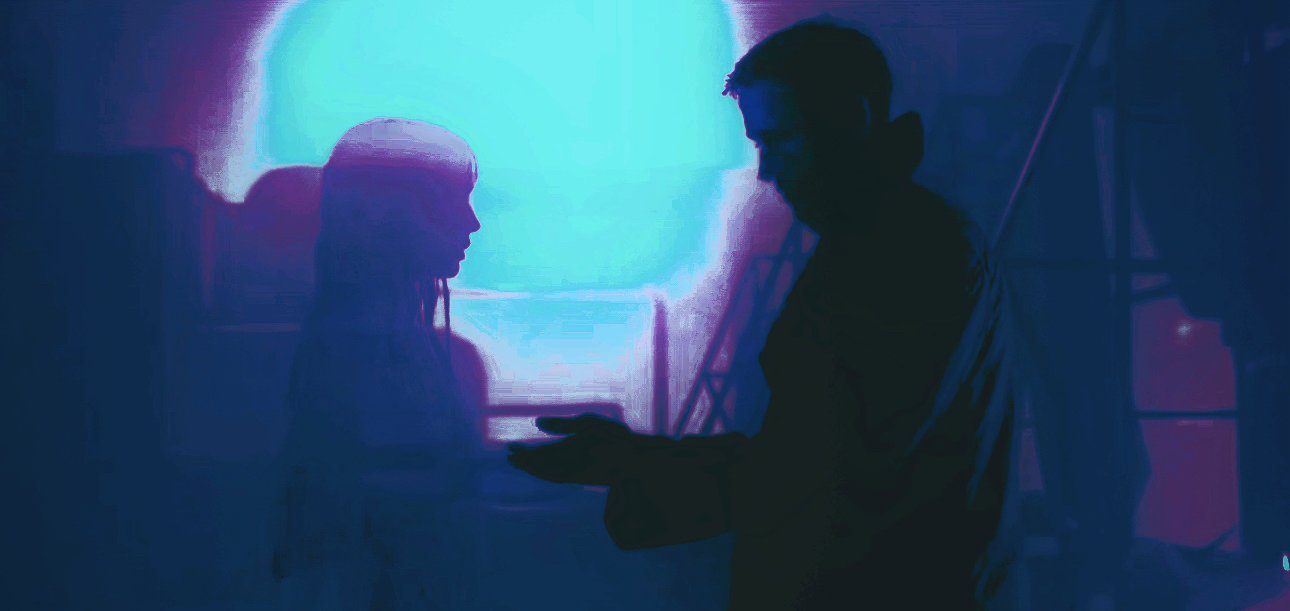
My Blade Runner 2049 trailer rescore is a hybrid production featuring melodic dubstep. It completely rises from and lives in the picture, exploring how music must share space with dialogue, sound design, and the original edit.
Instead of writing a simple motif and repeating it, I treated the trailer as a living system shaped by synthesis, timing, frequency, and tension — every decision made in service of the image.
Watch the Rescore
// BLADE.RUNNER.2049 — TRAILER.RESCORE
Credit Sheet
On the Work
As a film composer, I've noticed that even today, most major trailers fully pull the music down the moment anyone speaks. It never clashes with the voice — but it breaks the music's continuity. The score becomes something that simply gets out of the way, rather than something that moves alongside the dialogue.
I've found that 90% of composers struggle most with mixing not because they lack creativity, but because they've never had systematic training in critical listening. When you can't hear what you're doing, you end up making the same compromise — duck everything, hope for the best.
"How do you preserve the low-end impact of the score while leaving the dialogue completely untouched?"
When rescoring the Blade Runner 2049 trailer, that was the central problem I had to solve. My answer was precision EQ cutting — pulling every instrument down by 6 dB in the 1–4 kHz range, where human speech is most intelligible, anchoring bass voices below 120 Hz for weight without interference, and using dynamic compression to control the muddy buildup in the 200–400 Hz mid-range.
That technique is what gives the score consistent presence — whether heard in a cinema, through a home theater, or on headphones. My goal is to turn what I've found — a dialogue-friendly mixing workflow — into a free Chinese-language tutorial series for women film composers in China, so that neither technical barriers nor the human voice ever stand in the way of their music.
Sound Design
A core of this project is to use electronic synths to mimic the sound and texture of acoustic instruments, especially in moments where traditional orchestration clashes with dialogue.
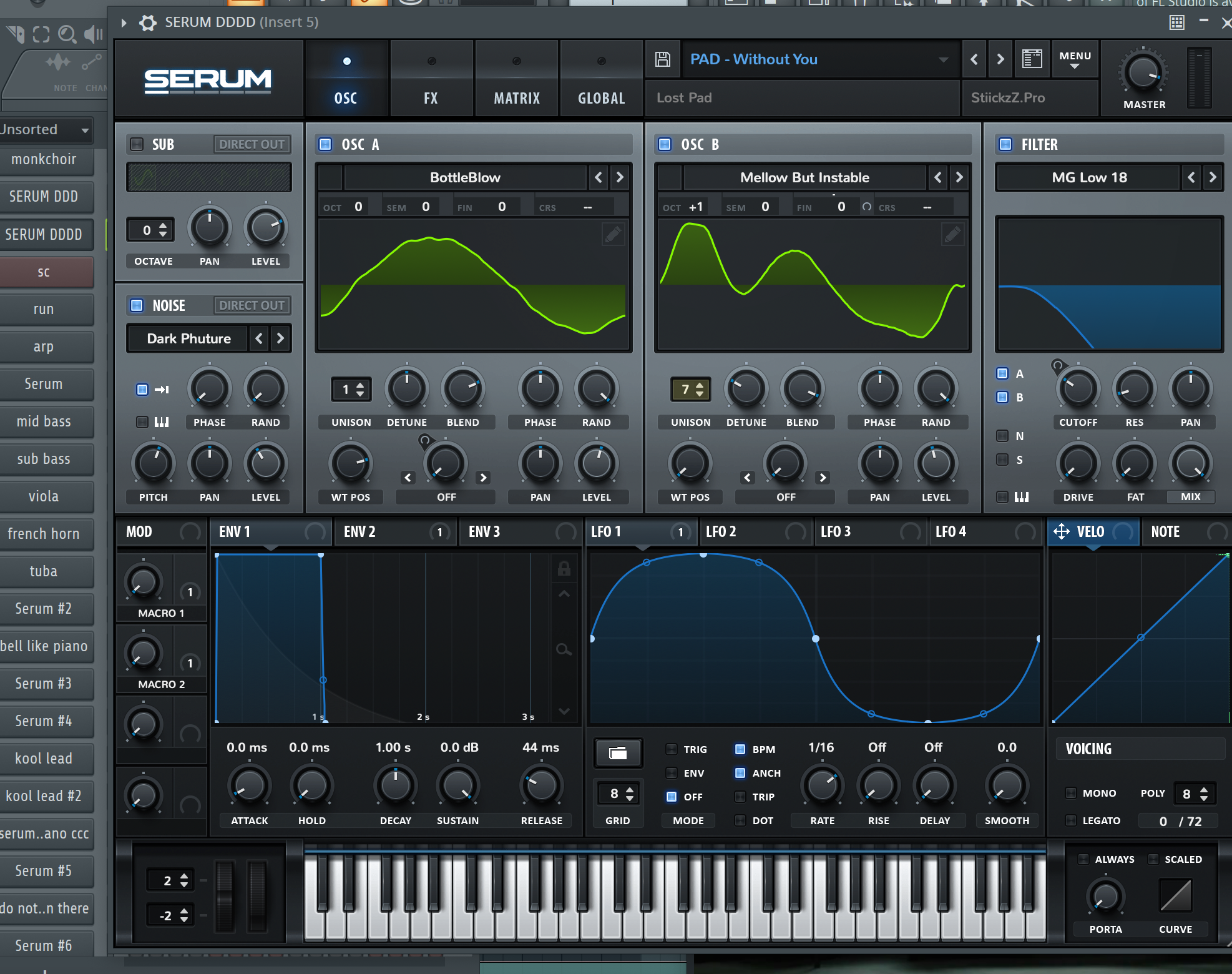
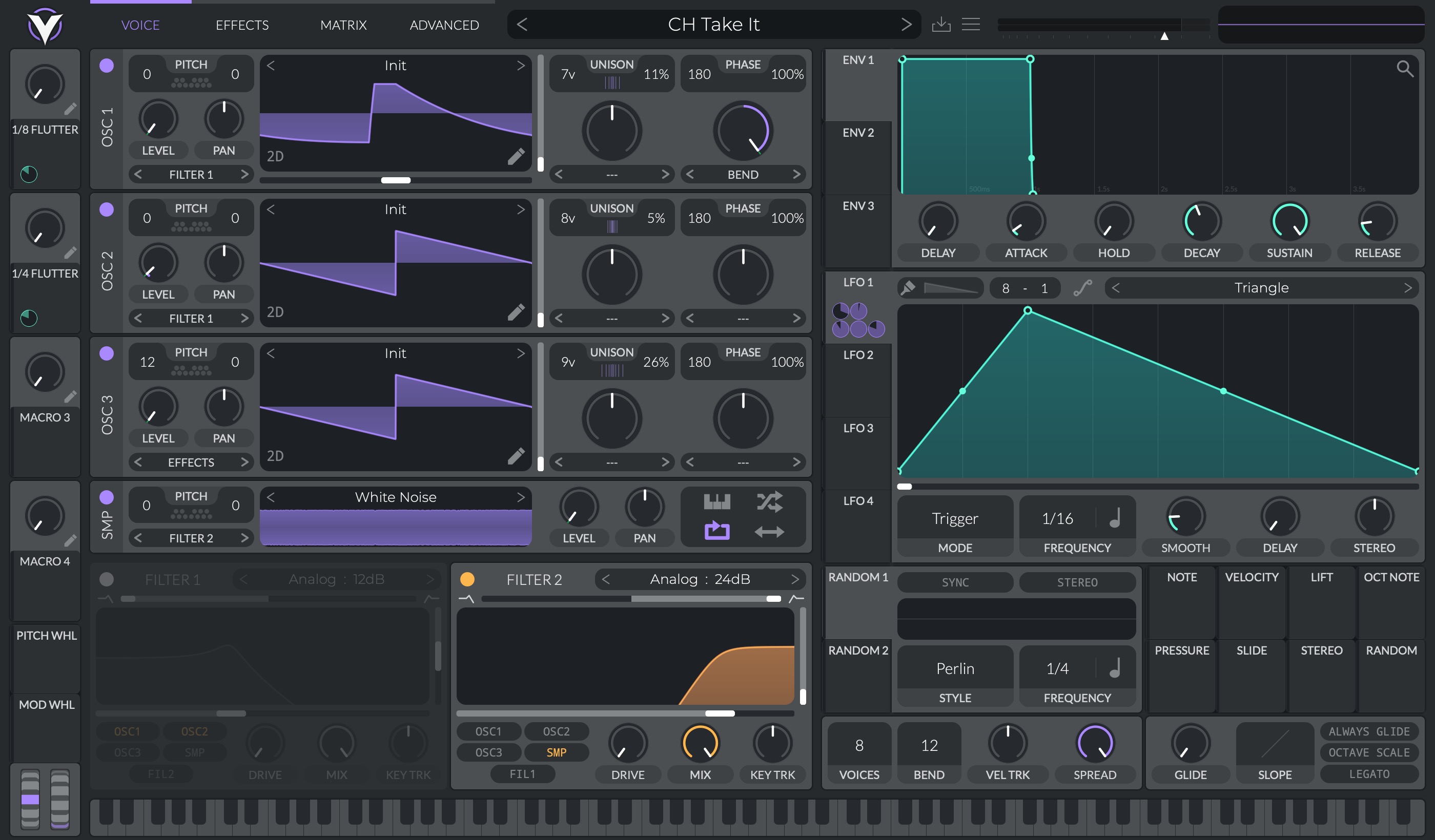
Inspired by Hans Zimmer's hybrid scoring approach, synthesizers such as Serum and Vital offer a crucial advantage: while they reproduce the sound and movement of live instruments, they allow far more precise spectral control.
Through wavetable selection, filter modulation, and envelope shaping, I designed sounds that breathe like real instruments while avoiding speech masking. The synths maintain a subtle electronic identity — the balance between realism and synthesis supports Blade Runner's futuristic aesthetic.
Digital Signal Processing
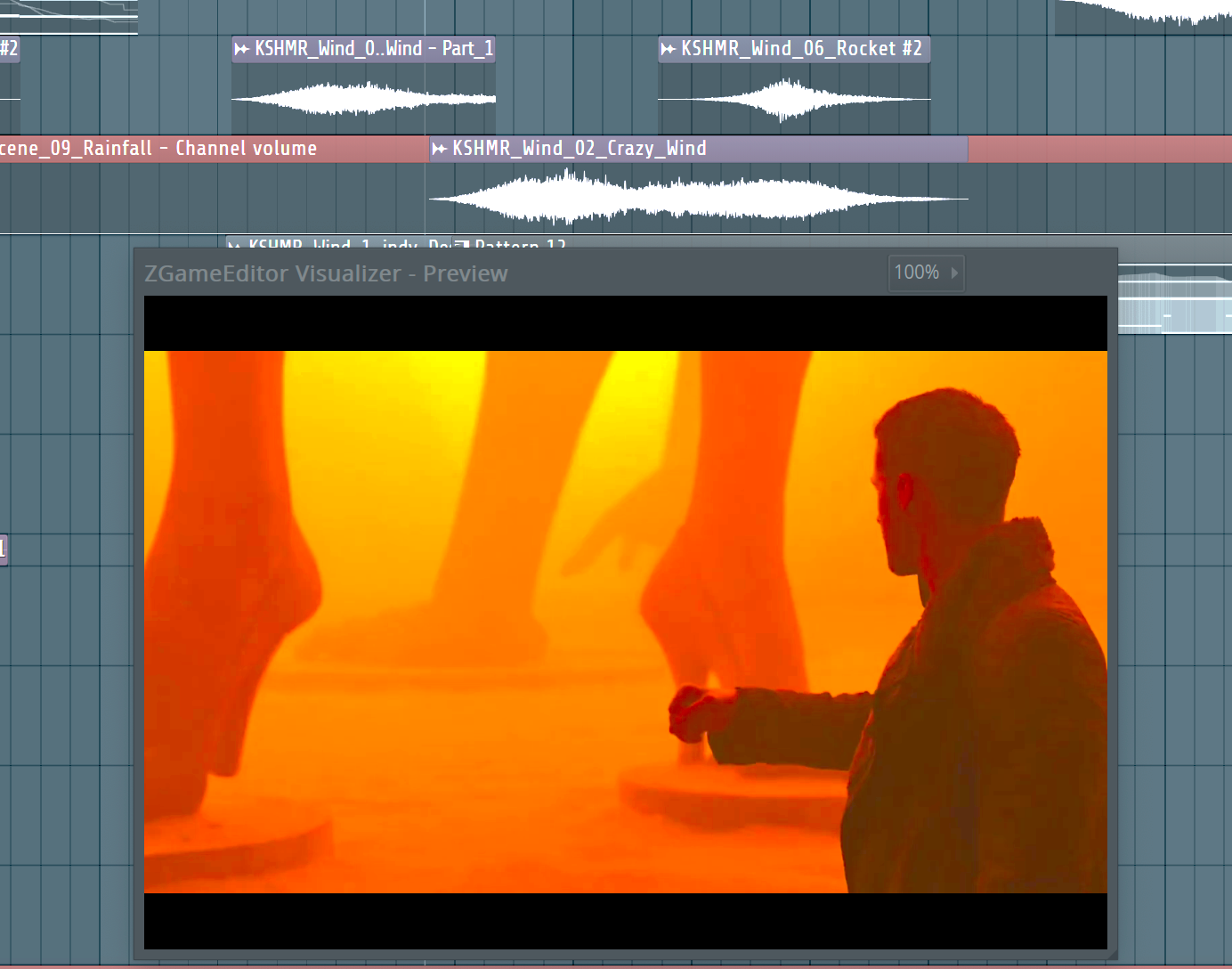
Instead of static signal processing, I designed the sound to move with the picture through modulation and automation. LFOs synced to tempo control filters, harmonic levels, and distortion — the sound breathes with the flow rather than sitting fixed on top.
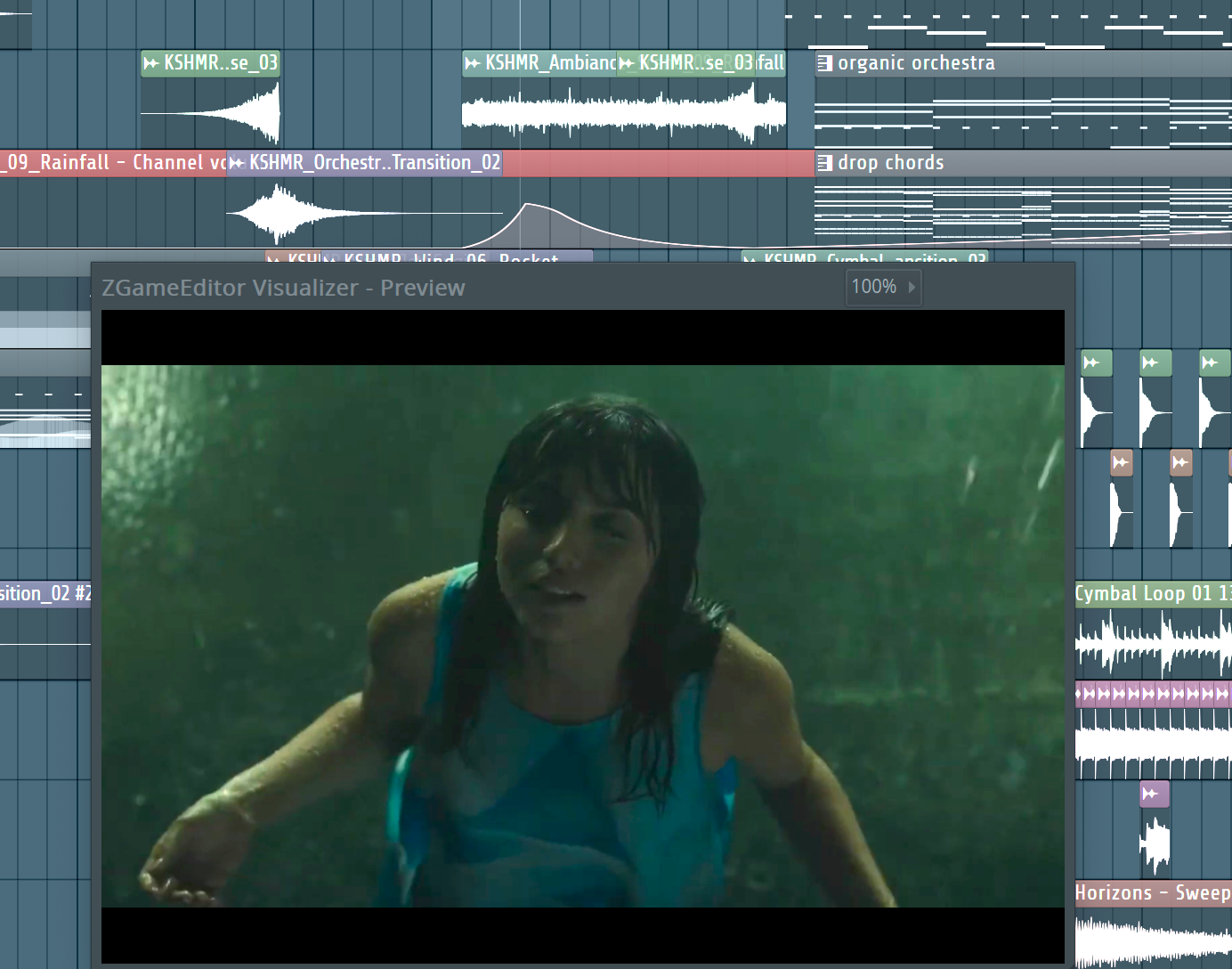
Filters build with a spotlight sweeping back and forth. Stereo widens in desert shots. During rain scenes, reverb and delay increase to blend music into environment. Short rhythmic modulation rates (¼) create subtle motion — DSP is performative here, rising and falling in real time.
// rain-scene · reverb-automation · channel-volume
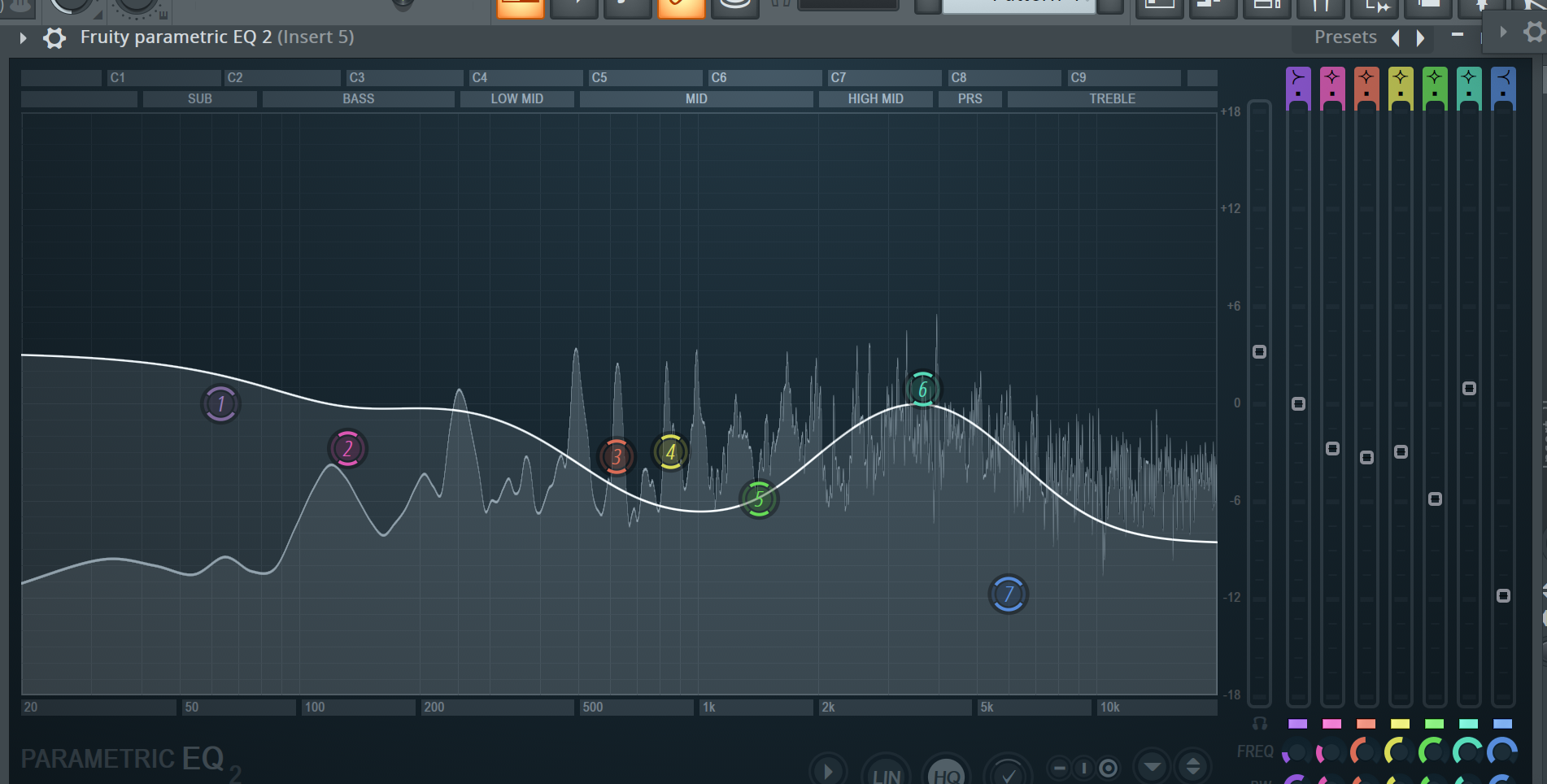
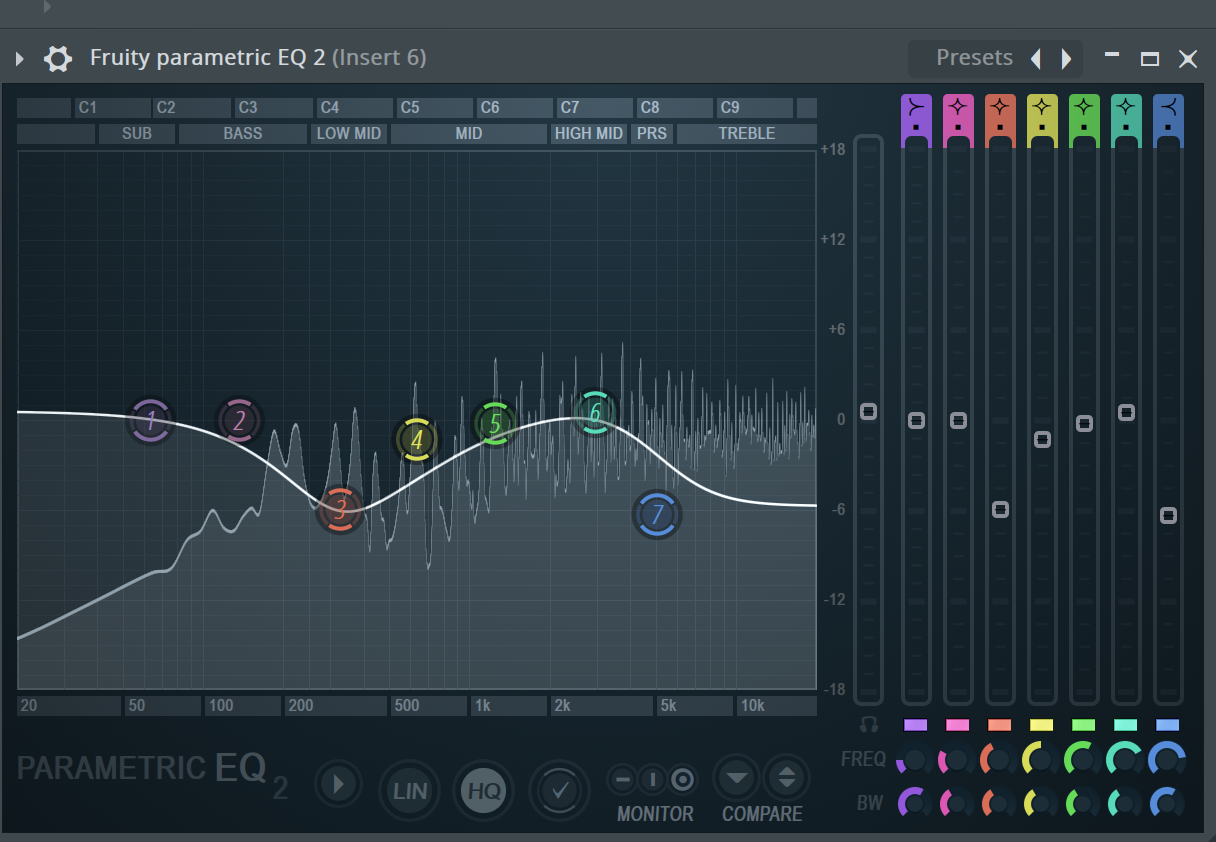
Because this was a rescore, the original dialogue is fixed. I tailored the music around the human voice. Speech intelligibility peaks at 2–3 kHz — so I reduced most instruments' EQ in the 3–5 kHz range throughout production.
Sub-bass, cello, and double bass were anchored below 120 Hz for weight without interfering with dialogue. The 200–400 Hz mid-bass was tightly controlled to avoid muddiness. Music must feel alive while knowing when to step aside.
// parametric-eq2 · spectral-shape · dialogue-safe
Tempo & Motif
Tempo selection was driven entirely by image, not genre convention. The decisive reference point was the gunshot. At 75 BPM, the alignment felt perceptually late — the gunshot didn't end on beat, the drumbeat didn't kick at the cut.
Yet at 74 BPM, the transient locked precisely with the visual cut. One single BPM made all the difference.
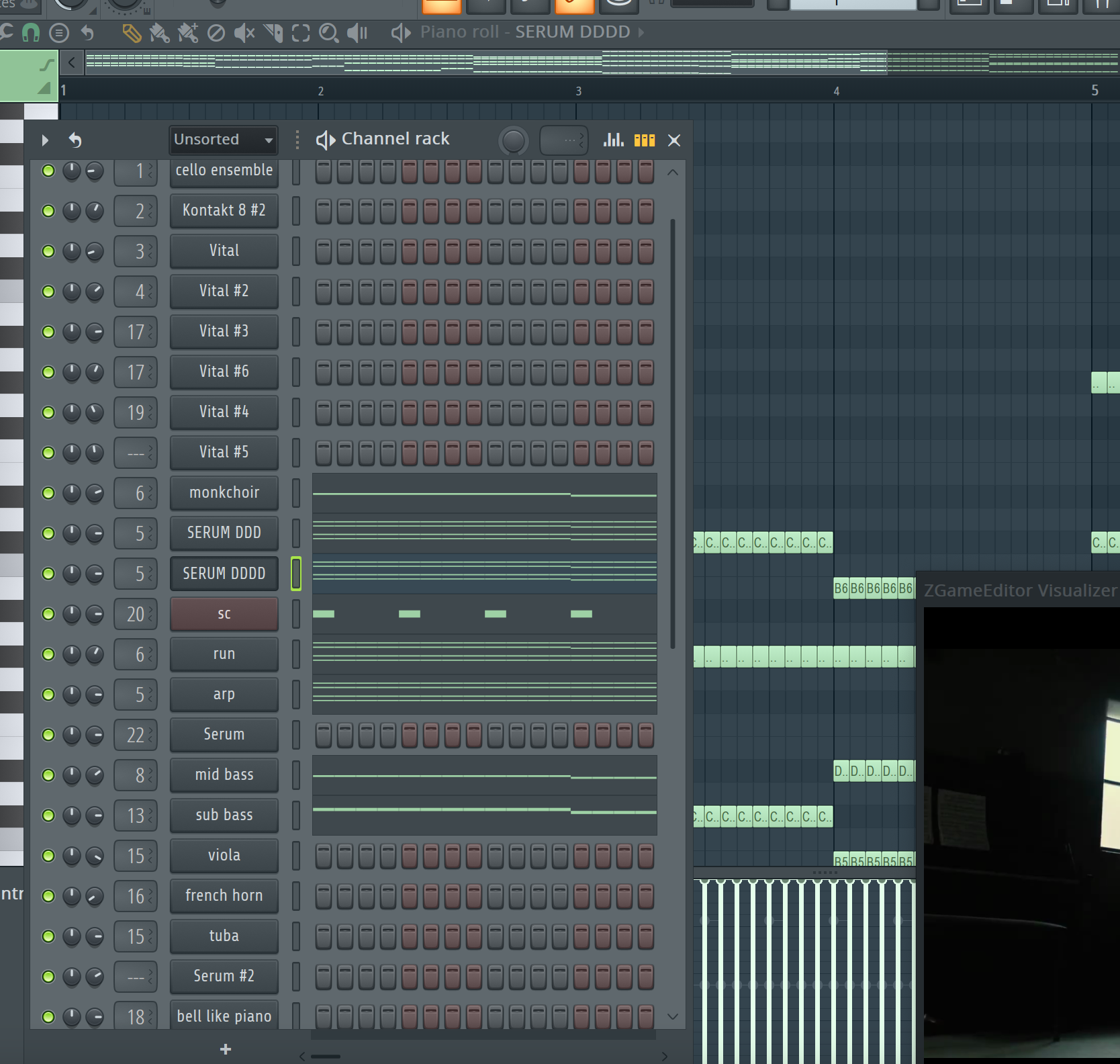
The structural core of the score is a recurring motif introduced immediately after the studio logos. Built on C♯–G♯–F♯–D, it is intentionally harmonically flexible — sitting naturally over A7, F♯7, C♯ minor, and B major.
By reharmonizing the same motif across different progressions, the music gradually builds toward its climax — where the motif is finally allowed to fully unfold and dominate the texture.
A second layer operates more subtly. From the moment Joe enters the desert, a bell-like piano repeatedly plays C♯ — a single sustained pitch creating tension and space beneath the scene. It stays with the listener and returns in the final fade out.